

With multiple difficulty levels and a compact, travel-friendly design, does this screen-free brain teasing puzzle live up to its name as a strategy-based game? Let’s uncover the suitability of the Rubik’s Gridlock for your child with this review!
Introducing educational toys into your child’s life is a great investment when it comes to their learning and development, because some skills are just better learned with fun!
But there are so many types of educational toys out there for your pick, such as popular ones like building blocks, puzzles, engaging books, and many more.
This begs the question: Which is the right type for you and your child then?
We have compiled a list of some of the most popular types of educational toys for children with bright and curious minds to practise and develop their skills like their literacy skills, building, mathematics, and other practical skills!
Before understanding the different types of educational toys out there, we feel it’s important to know what educational toys are.
Educational toys are objects of play for your child of all ages, designed to stimulate their mind and develop practical skills through learning while having fun.
Depending on your child’s age, there are different types of toys designed specifically for their needs and learning styles, which is what we will be discussing in this article.
With educational toys getting popular in Singapore now, there are just many more ways when it comes to exploring new learning possibilities and opportunities for your child while playing – mostly through various learning stimulus such as problem-solving, imaginative stimulation, or even open-ended creativity.
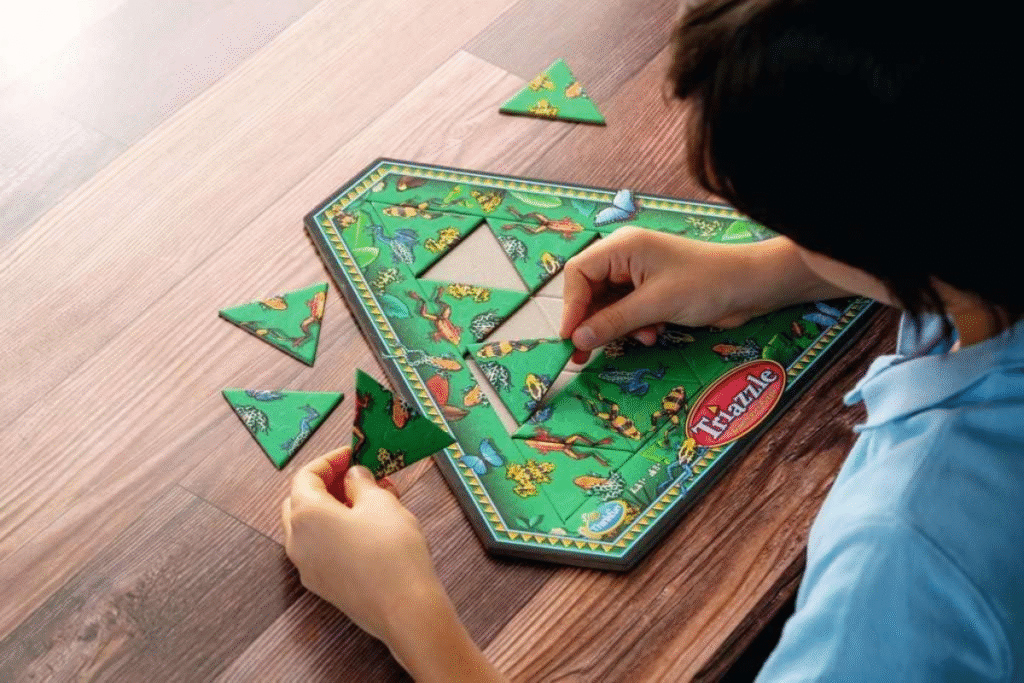
Because there are many ways to trigger that learning responses from your child, it’s important to understand the different types of educational toys available and their benefits before you make that purchase decision.
Thus, we have compiled a list of some of the most popular types of educational toys for your child to learn and develop those necessary practical lifelong skills!
Some of the types include:
Building blocks, or construction blocks, are one of many toy categories that resemble modular construction parts, usually made of plastic.
The basic components of these building and construction toys vary in shapes and sizes, but are usually shaped in cuboid-shaped, hollow-bodied at the bottom and smooth at the sides.
Their upper surface interacts by positive locking with the negative lower surface of corresponding components. This design allows for the blocks to be connected.
Some of its desirable characteristics include:
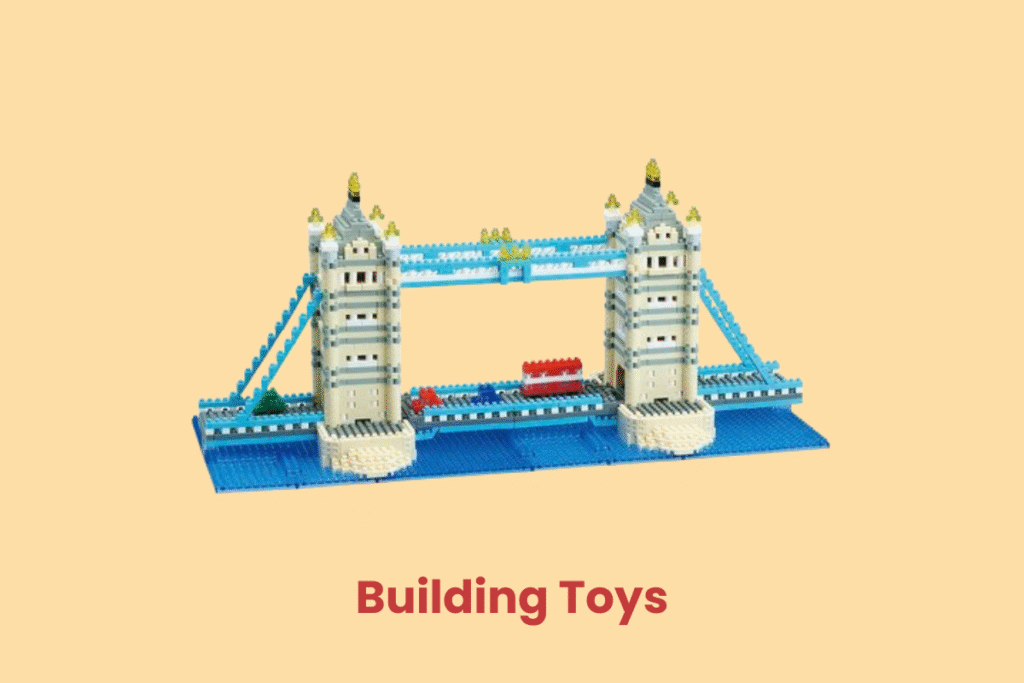
Why is this suitable for your child: The idea of construction can be integrated into play-and-learn scenarios which can help enhance their development in areas such as their motor skills, hand-eye coordination, spatial skills, and creative thinking.
Who is this for: Building and construction toys generally have a recommended age range of 18 months to 10 years old for young kids.
However, we also notice that they extend to adults or even elderly, especially if they are avid collectors of certain licensed series from nanoblock, which is a line of micro-sized building block toys, originating from Japan.
When it comes to puzzles as a toy category, the common jigsaw puzzles may cross your mind.
You’re not wrong.
A puzzle is a game, problem, or even an educational toy that poses as a challenge that tests a person’s knowledge or problem-solving skills. If you’re not familiar with how puzzle works – imagine the solver being handed a board of game, expected to put the pieces together in a logical way in order to solve it.
There are many types or genres of puzzles available, such as:
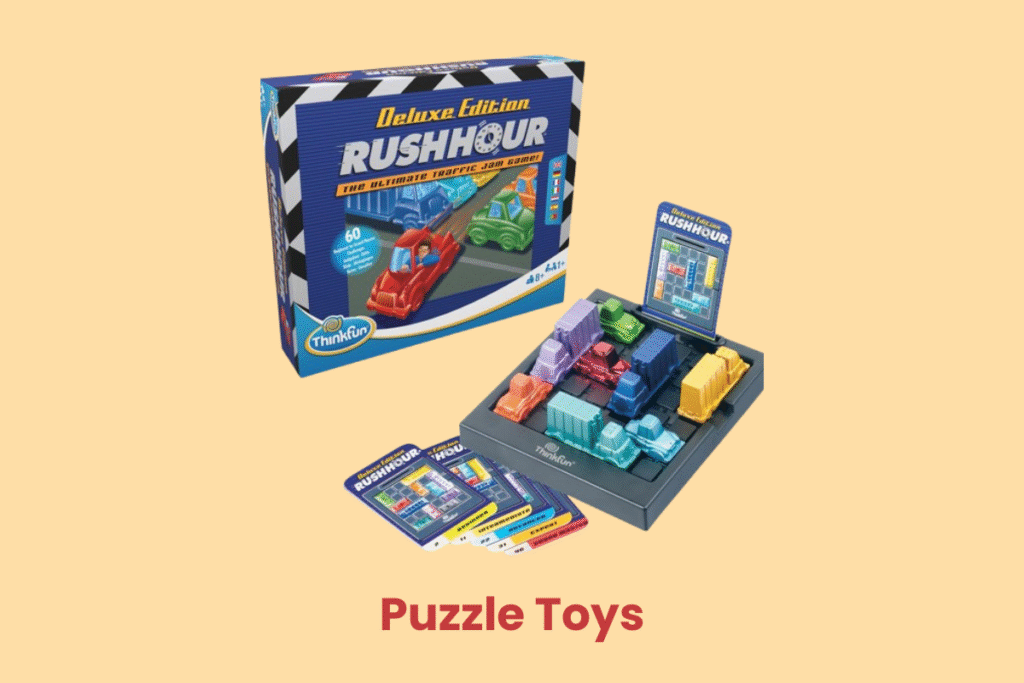
Why is this suitable for your child: Puzzles are some of the timeless classics that never go out of style when it comes to engaging your child in a fun way while also offering so many learning opportunities for their development.
They help build problem-solving skills within your child, improve your child’s focus and attention and also develop their fine motor skills needed throughout their life.
Who is this for: Puzzles are extremely versatile category that can grow alongside your child as they develop through their youth. There’s a puzzle designed for every age and stage of your child’s life.
The general guideline is that puzzles can be introduced to your child from ages 1 to 8 years, and sometime even above.
Hence, the type of puzzles that will stimulate their learning at different life stages also differ quite a bit. From puzzles that involve large, chunky and easy-to-grasp concepts to one that have intricate designs and 3D puzzles for building their focus and thinking.
Some of our favorite puzzles that we’d recommend include the Rush Hour series, Triazzle Picture Puzzle from Thinkfun, and Thinkfun Hoppers.
Let’s face it – math may not be your child’s favorite subject or strength. But when you introduce it to your child’s learning and integrating hands-on play, that’s when the magic happens.
Mathematics toys make problem-solving and numbers more bearable. It becomes a fun adventure, especially since these toys help build your child’s confidence around numbers by integrating mathematical concepts through play.
These toys help develop skills in areas such as:
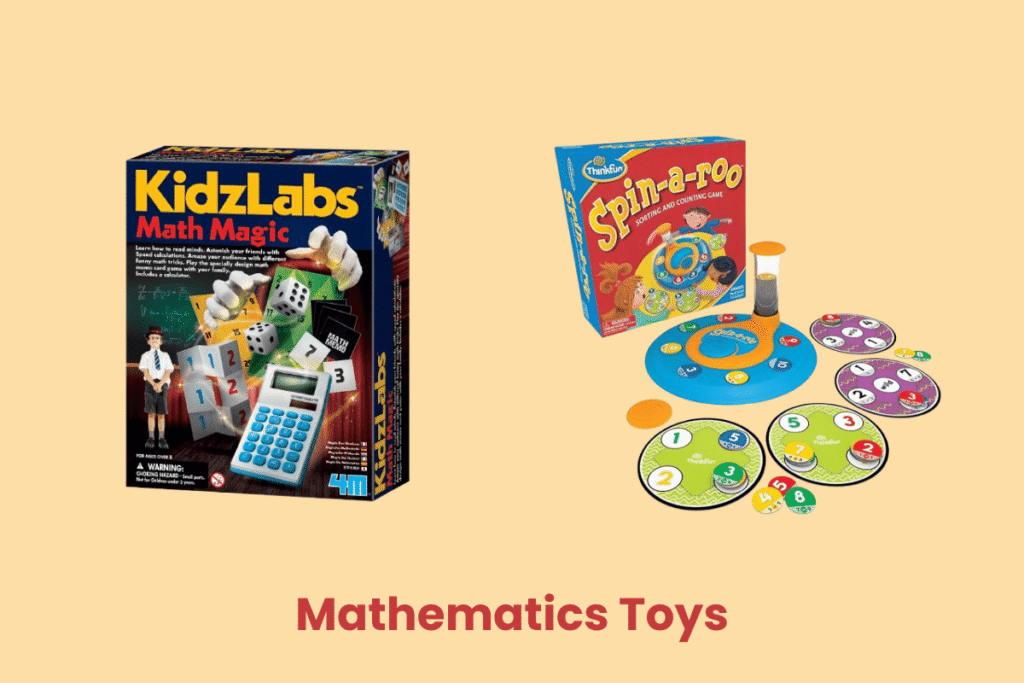
Why is this suitable for your child: Math toys are designed with your child’s natural curiosity and learning style in mind. They make learning feel like play.
Here are some reasons why we feel mathematics toys make such a great fit for your child:
Who is this for: This type of toys are designed to meet your child’s learning stage, regardless of their age.
From toddlers who are just beginning to recognize numbers, to older kids solving multi step puzzles, there’s a math toy for every stage of growth. Here’s the breakdown by age that we would recommend:
Some of our favourite mathematics toys include 4M KidzLabs Math Magic and Spin-a-roo from Thinkfun.
What could be a better way to connect with your child and his learning than with a language toy?
Language is how they connect with the world, and language toys do it in a great way by helping your child explore sounds, words, storytelling and communication in the most natural way, while combining fun and play in the mix.
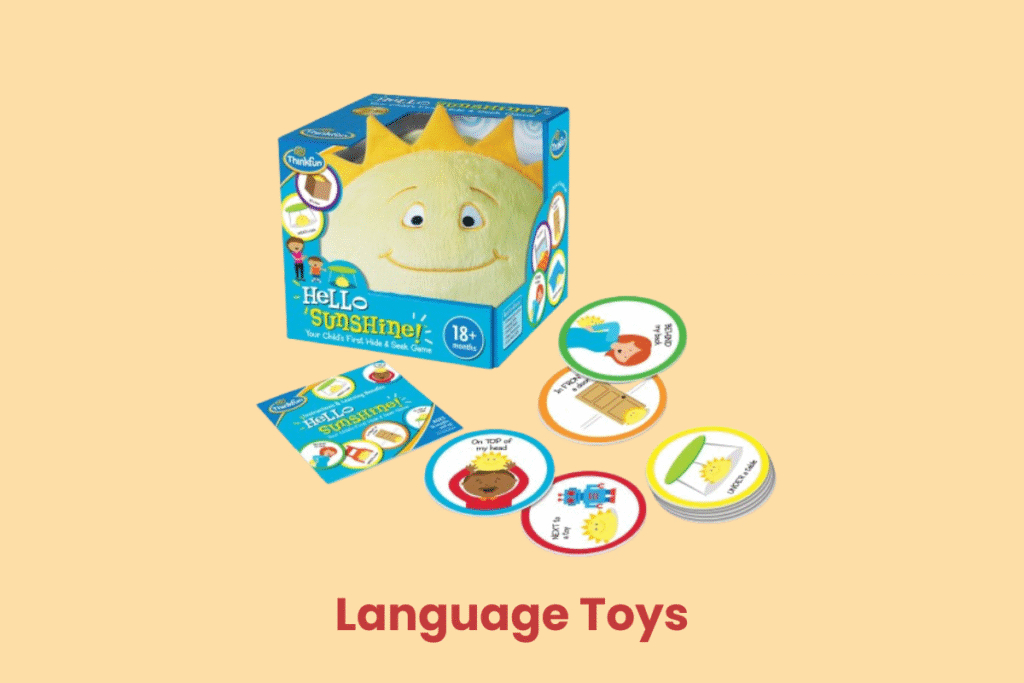
Why is this suitable for your child: In our opinion, language toys make some of the best types of educational toys for your child as they encourage early speaking and listening. For little ones who have just begun babbling or speak, language games are perfect.
Some of the benefits of exposing your child early to language toys are also as such:
Who is this for: Language toys are suitable if your child is from as young as 1 year old all the way to 10 years old. They grow alongside your child, from helping toddlers learn first words through sound, to supporting older kids in reading, storytelling, and thoughts expression and articulation.
For this category of educational toys, you will not go wrong with Hello Sunshine Hide-and-seek Toddler Game from Thinkfun!
When we think of science, we often associate it with people with curious minds as this subject always opens up a world of discovery, satisfying all the curious young minds out there.
That sense of curiosity is why science STEAM kits are so magical when it comes to offering your child learning opportunities if he has a mind of curiosity. They turn big, complex ideas into bite-sized, hands-on moments that are easier for your child to understand and explore.
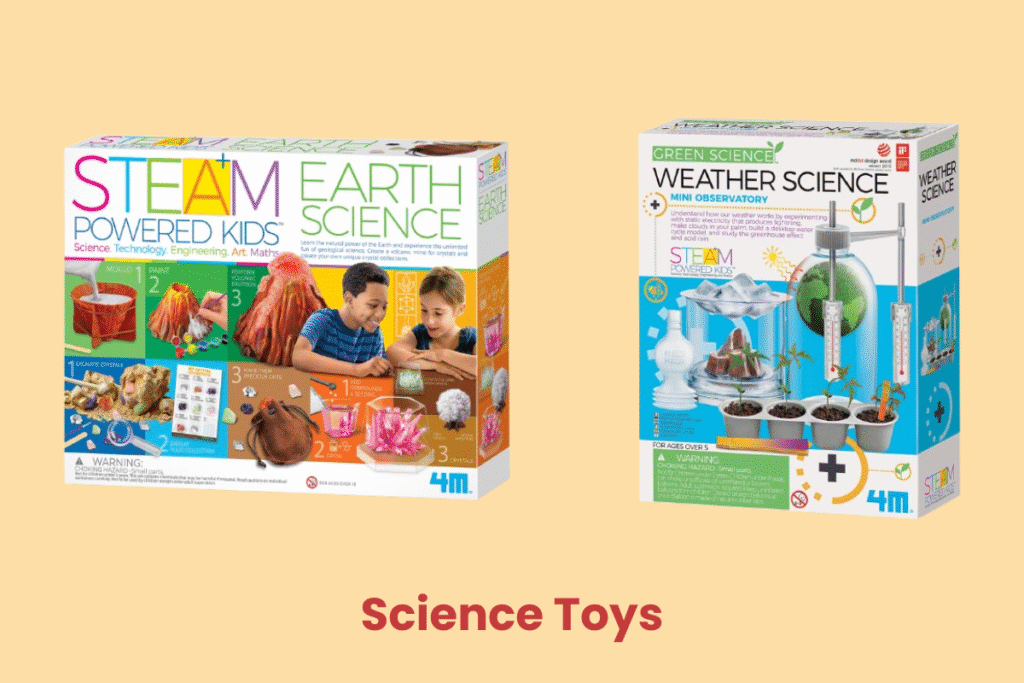
Why is this suitable for your child: In our opinion, science STEAM kits are great alternatives to other types of educational toys if you’re looking to grow your child’s holistically in this respect:
Who is this for: In general, science toys and science STEAM kits are suitable for curious children aged 3 to 10 years old.
For ages 3 to 5 years, toys introduced at this stage allow your child to grasp some scientific concepts in a simpler way through fun, hands-on play.
For ages 5 to 7 years, these science toys spark curiosity with science STEAM (Science, Technology, Engineering, Arts, and Math) kits and experiments
For ages 7 to 10 years, your child would require a much more complex set of science STEAM kits that are designed to offer deeper learning through complex discovery sets.
if you’re looking for Science STEAM Kits for your child, then may we suggest the following best-selling STEAM Kits that have been very popular amongst parents lately:
Role-playing toys, also known as imaginative play toys, is a type of toys where your child uses to act out scenarios and uses his imagination to create different roles and situations.
Did you know that for role play, it’s as important of a fun and engaging activity to your child’s development as reading? Reason is that through role-playing toys, your child learns to experiment by being different characters and thus building his communication and socializing skills.
Even by pretending to play by themselves, your child can also learn to be creative with just using his imagination. There has also been a study published in the journal Frontiers in Psychology that shows imaginative play can have long term benefits for cognitive development for your child as well.
If that’s the case, who would be most suitable for this beneficial toy? Let’s find out!
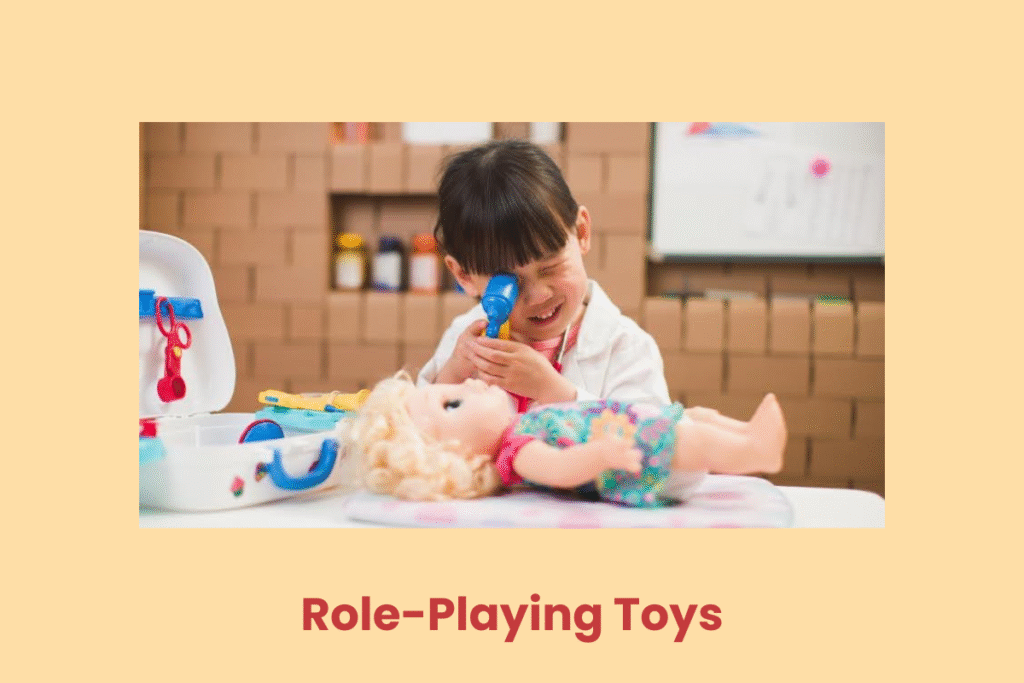
Why is this suitable for your child: In our opinion, engaging in role play has many benefits for your child’s development. Indeed role-play allows your child to learn and be exposed to different narrative and characters and thus improving his communication skills at an early age, but there are more to it, such as:
Who is this for: In general, role-playing toys are perfect for young children as young as 2 years old, and they continue to provide valuable learning opportunities for them all the way through age 7 and beyond.
Here are the age groups we’d recommend:
For ages 2 to 5 years, young children would start imitating simple actions like talking on a toy phone to acting out in family roles or jobs. If your child is in this golden age, you may consider educational toys like kitchen sets, baby dolls, play tools, and dress-up clothes to name a few.
For ages 5 to 7 years, young children would start creating more detailed, story-driven play. They would also start to communicate and work together with peers during role-play. If your child belongs to this age group, consider getting him play houses and other role-specific kits.
If your child has a love for music early in his life, then you may feel that this type of educational toys is the right one for him. We are referring to musical instrument toys.
Your child doesn’t need a concert hall to spark that love for music – instead all it takes is a tiny drum set at home. Musical instrument toys aren’t just fun and noisy, but they play a meaningful role in your child’s early development.
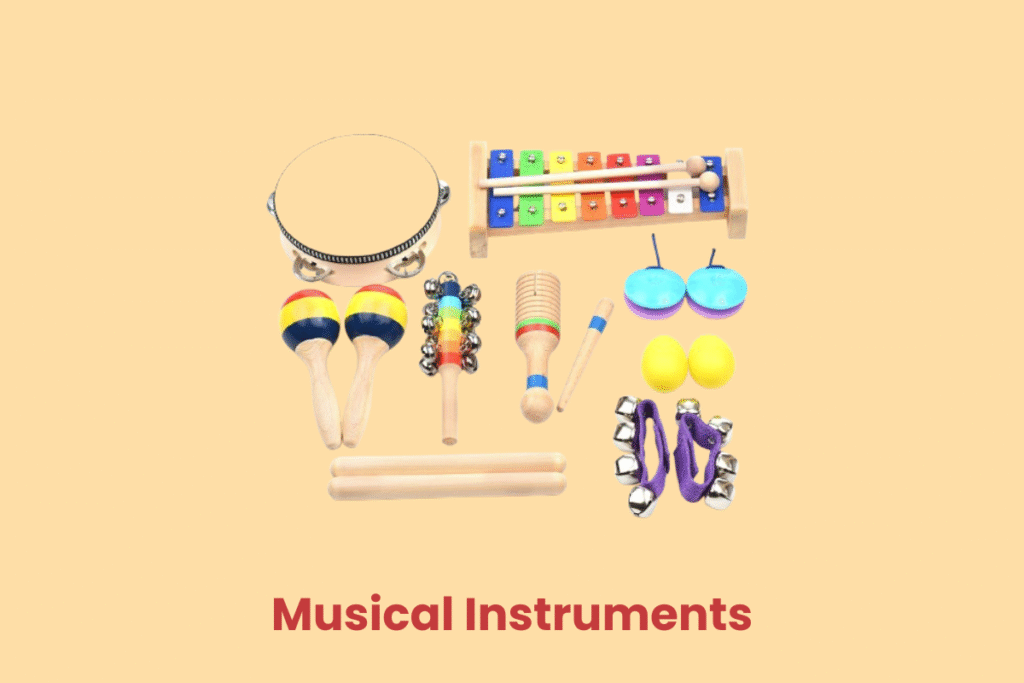
Why is this suitable for your child: From helping your child explore sound and rhythm to encouraging self expression, musical instrument toys are a joyful way satisfy that curiosity, and learn through play.
We personally feel this type of educational toys is beneficial to your child in these following areas as well:
Who is this for: Musical instruments toys are suitable for young children from the age of 6 months old, all the way through early primary school years such as 7 years old and beyond.
Here are the age groups we’d recommend:
For ages 6 to 18 months, infants are the most curious about any kind of sound produced. If your child is in this age group, consider soft rattles and toy maracas that could introduce rhythm and sound.
For ages 1 to 5 years, your toddler may start banging, tapping or even shaking to get your attention. This is a wonderful time to introduce toys like xylophones, small drums, keyboards, or even ukuleles to encourage that hand-eye coordination and self expression, while also strengthening his learning.
For ages 5 to 7 years and beyond, your child may start showing deeper interest in music. So, simple educational toys like song-learning toys and even starter instruments can come along way, helping them build that basic music skills on top of that curiosity.
Fine motor skills are the small movements that young children are able to make with their muscles in their hands and wrists. Mastering this skills is crucial for lots of everyday tasks that may involve grasping objects, doing up buttons, or even using tools such as pencils or scissors.
The good news is that most fine motor skills development can be encouraged through certain motor skills toys. One of these educational toys encourages gripping of objects between thumb and index fingers.
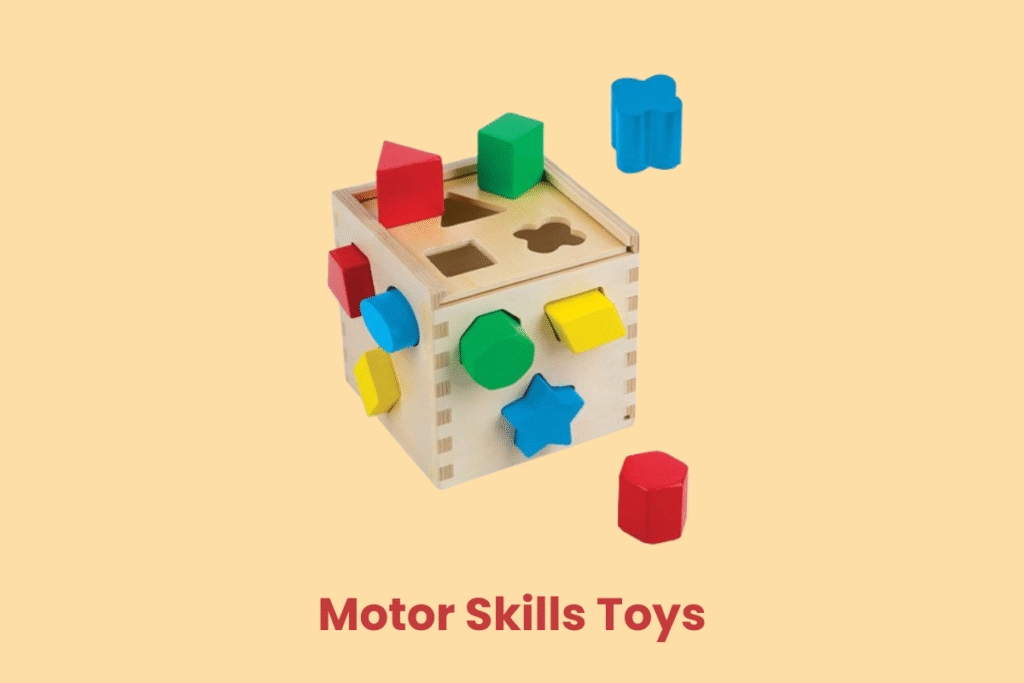
Why is this suitable for your child: Motor skills toys are designed specifically to support your child’s physical development, from fine motor precision to coordinated movements.
The best part is that these toys facilitate this learning process by integrating joyful play!
Here are a few more reasons why we think motor skills toys make a wonderful fit for your child’s learning and early development:
Who is this for: These motor skills toys are the perfect skill-building tools for infants as young as 6 months old, all the way to early primary school years (around 6 to 7 years old). They not only support fine motor skills such as precise small movements, but also larger coordinated movements that are key for their everyday tasks.

Share:

With multiple difficulty levels and a compact, travel-friendly design, does this screen-free brain teasing puzzle live up to its name as a strategy-based game? Let’s uncover the suitability of the Rubik’s Gridlock for your child with this review!

ThinkFun’s Chocolate Fix isn’t just another puzzle game—it’s a delightful brain-teaser disguised as a box of chocolates. In this review, we break down how it works, and determine if it’s suitable as a screen-free puzzle game for you or your child!
Educational toys do more than keeping your child entertained – they help shape how your little one grow. Backed by research and real-world observations, this post explores six reasons why these educational toys matter and differentiate themselves from other toys.
In this guide, we’ll walk you through how to pick the right educational toys that match your child’s age and developmental stage. Whether you’re shopping for your curious child or a young problem-solver, you’ll find simple tips to choose toys that inspire learning for their growth, and yet instilling fun.
Educational toys play a more important part than ever before in any children’s learning and development these days. What exactly is the deal about this type of toys?
Educational toys are designed to promote learning and development while having fun, while traditional toys focus on imaginative play. Read to find out more!
Subscribe to be the first to know about our toy discounts, new releases, toy reviews, insights and upcoming events and workshops!